
TPO Overlay vs. Restoring Your Current Roof: What Texas Building Owners Need to Know
Updated: Dec 18, 2025

TPO is an excellent roofing system. For new construction, it is one of the most economical, energy-efficient, and future-friendly roofing options available. New buildings usually have proper insulation levels, clean substrates, and structural support designed specifically for TPO.
But when it comes to re-roofing older buildings, the conversation becomes much more complex — especially when owners are comparing a TPO overlay vs. a roof restoration.
Most overlays in Texas are NOT TPO-over-TPO.They’re TPO installed over Mod-Bit, Built-Up, EPDM, or older layered systems.
This article will walk you through what building owners need to know before committing to an overlay — and why restoration often makes more sense.
Why Some Owners Consider TPO Overlays
Most building owners are pitched overlays because:
They appear cheaper than tear-off
They avoid dumpsters, debris, and downtime
They create a “brand new” look
Sales reps promise “20-year warranties”
The process sounds quick and clean
But an overlay is more than just laying a membrane over what’s already there. The existing roof becomes part of the new roof system — and if the old system has problems, you’re locking those problems in permanently.

The Real Risks of TPO Overlays on Mod-Bit, BUR, or EPDM Roofs
1. Condensation Problems Between Layers
Most older buildings do not have enough insulation to prevent heat transfer.When warm, humid Texas air hits a cooler layer under a new TPO membrane, condensation begins forming between layers — and it has nowhere to escape.
This moisture can damage the deck, insulation, fasteners, and anything below it.
(Overlays can work if insulation levels are high enough — but that is rarely the case on aging roofs.)
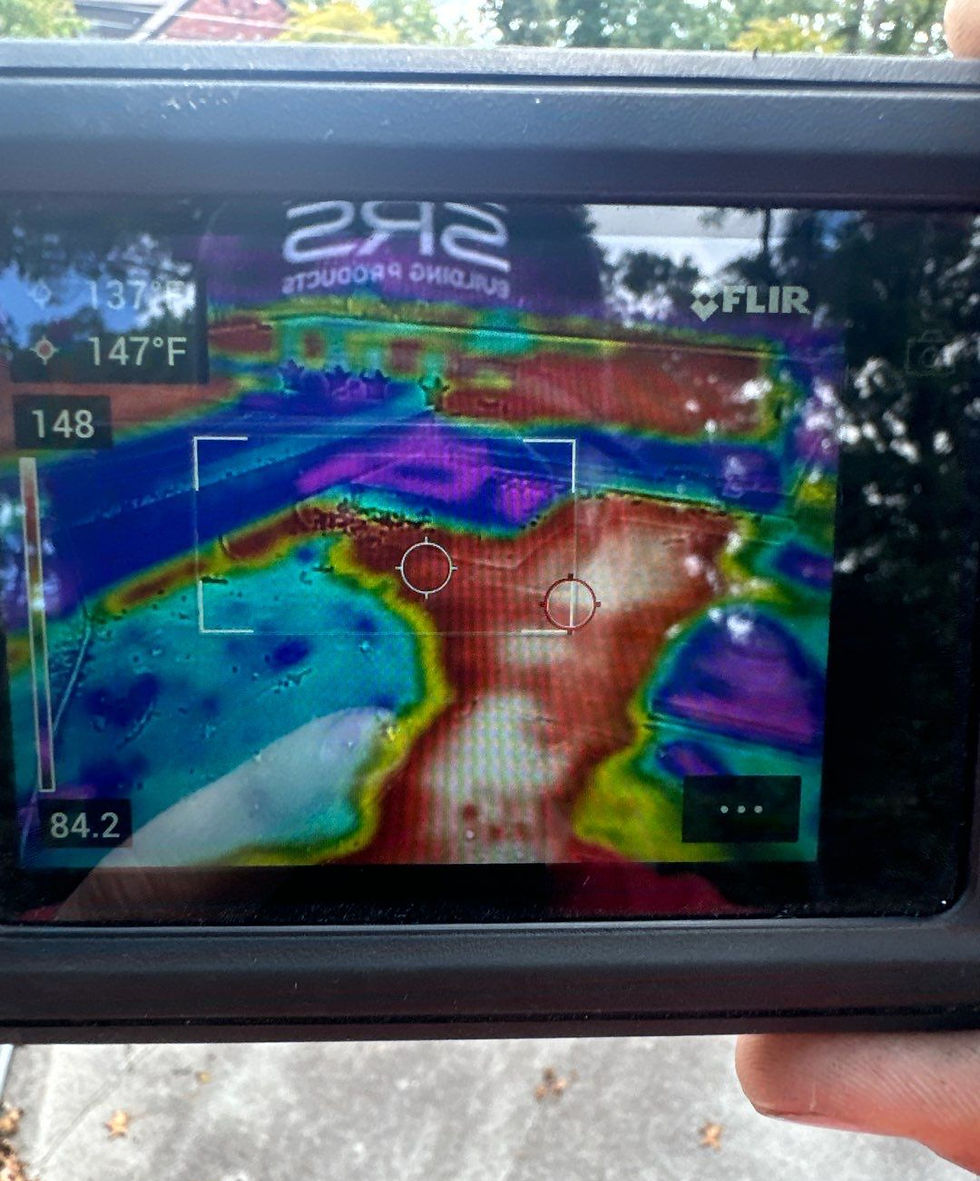
If any moisture already exists inside the roof assembly and you install TPO over it, that moisture becomes permanently trapped.
This causes:
Blisters
Insulation deformation
Rotten decking
Plate and fastener corrosion
As fasteners sit in damp or compromised insulation, they begin to rust out — and as that happens, the membrane loses its attachment. Within a few years you can end up with a loose-laid, poorly secured system, even if it looked perfect on day one.

3. Structural Load Concerns
A second full membrane system adds weight.Many older commercial buildings were not engineered for multilayered roofing systems.
An engineer should always confirm load capacity before approving a TPO overlay.
4. Adhesion & Material Compatibility Issues
Mod-Bit, asphalt, EPDM, and Built-Up roofs respond to heat differently.TPO adhesives often do not bond properly to these surfaces without correct preparation.
This can lead to:
Wrinkles
Tenting
Premature membrane failure
Pulling at penetrations and edges

5. Asbestos Considerations
Many older Mod-Bit and BUR roofs contain asbestos in the lower layers.
A TPO overlay does NOT encapsulate asbestos safely or meet best-practice standards for long-term stability.
A restoration system, such as SPF + coatings, encapsulates the substrate without disturbing it, reducing future abatement concerns and creating a seamless, fully adhered surface.
(See Case Study #1 below.)
6. Warranty Misrepresentation (The Fine Print Trap)
It’s extremely easy for a roofer to file a TPO membrane warranty with the manufacturer.Manufacturers often issue the warranty number with no upfront questions or inspections.
But in the fine print, that warranty is only valid if:
The contractor is certified
The underlying roof assembly matches an approved system
Proper fasteners, adhesives, boots, and terminations were used
Welds are tested and inspected
A manufacturer’s representative performs required inspections
Most cheap overlay crews do none of that.
The customer thinks they have a 20-year warranty when, in reality, the manufacturer has every reason to deny a claim.

7. Leak Tracking Is Much Harder on Overlays
Building owners often ask:
“Why is a restoration any different from an overlay when it comes to leak diagnosis?”
Here’s the difference:
TPO Overlay
Water or condensation can travel between the layers of the existing roof and the new membrane.This makes leaks extremely difficult to trace.
Restoration System
A restoration creates one monolithic, seamless surface.There are no loose layers for water to run between.
If there’s a breach, it’s straightforward to locate and repair.
When a TPO Overlay Can Work
An overlay is only appropriate when ALL of the following are true:
Moisture scan shows zero trapped moisture
Insulation levels are high enough to minimize heat transfer
Deck is structurally sound
Existing roof is fully adhered and smooth
Current roof system is compatible with TPO (Thermo Plastics)
Structure can support added weight
Full manufacturer specs are followed
Contractor is certified
Engineer signs off on the system
This eliminates the majority of low-bid overlay proposals.

When Restoration Is the Better Choice
Restoration systems (SPF + coatings or reinforced acrylic/polyurea systems) often make more sense on aging Mod-Bit, BUR, or single-ply roofs because:
They add minimal weight
They produce a seamless, monolithic surface
They encapsulate older layers (even asbestos-containing ones)
They greatly improve reflectivity and energy efficiency
They can be renewed at the end of the warranty
They avoid the risks of condensation and trapped moisture between layers
But restoration is NOT a cure-all.
If the substrate becomes too saturated, restoration won’t work. At that point, the conversation shifts from overlay vs restoration to tear-off — and then it becomes a completely different conversation about which system to install next.
Case Studies (Canton, TX)
Case Study #1 — Smooth Mod-Bit with Potential Asbestos
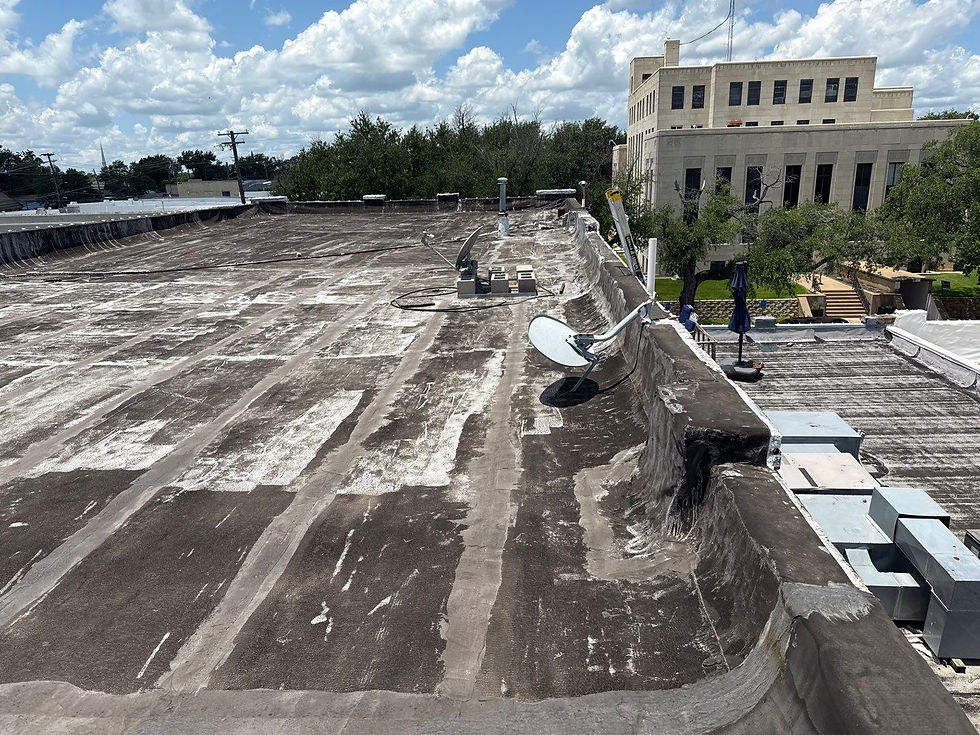
The owner was considering a TPO overlay. After evaluating the roof, we found:
Potential asbestos in original layers
TPO overlay would not safely encapsulate it
Tear-off would require costly abatement
A restoration system could be installed without disturbing the substrate

Solution: SPF + Coating Restoration
Seamless and fully adhered
Encapsulated potential asbestos
Reflective
Added insulation
Eligible for non-prorated, extendable warranties
Can be renewed with additional coating later instead of tearing off

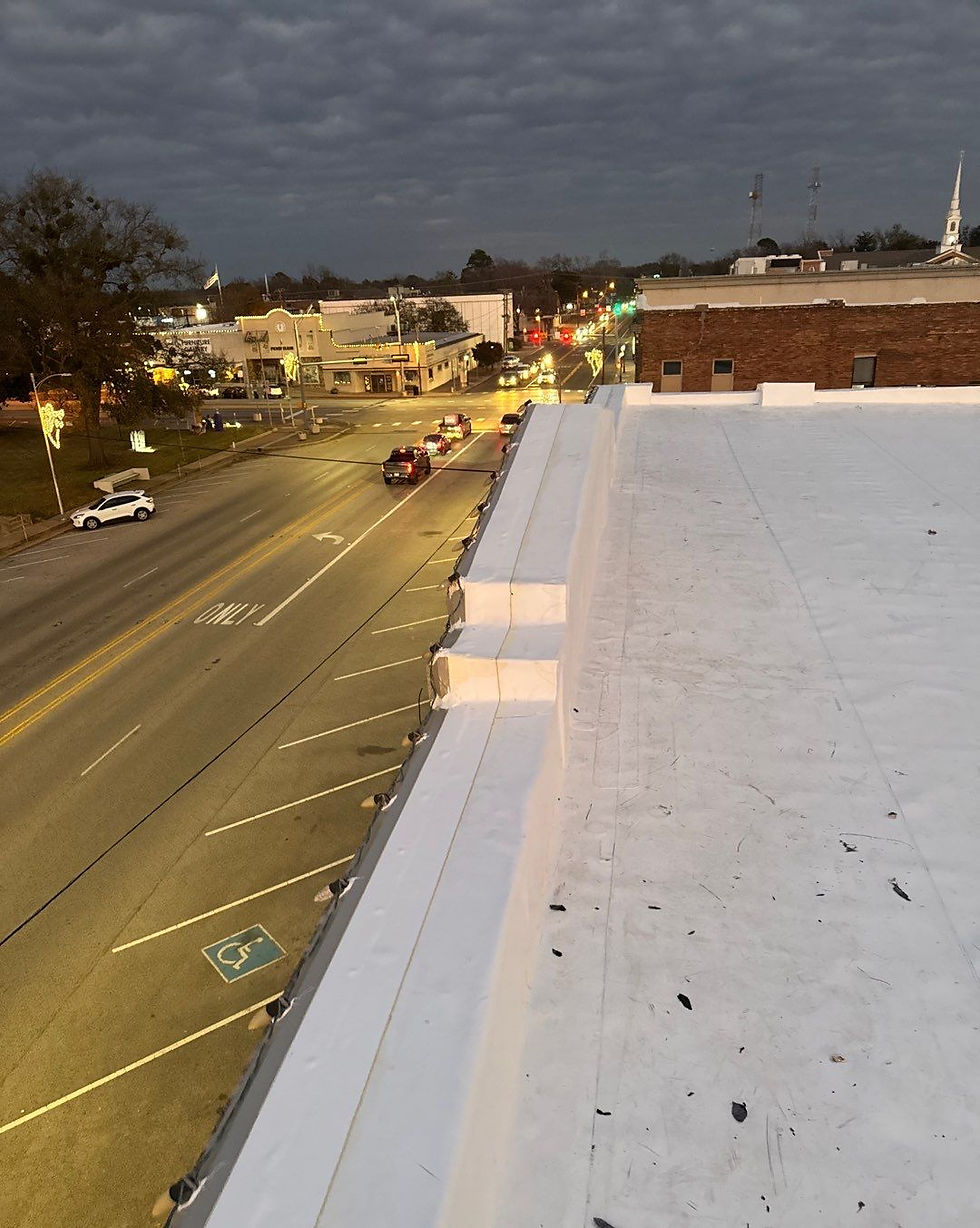
Completed SPF and coating restoration providing a seamless, reflective commercial roof in Kilgore, Texas.
Case Study #2 — Aged TPO with Failing Seams
This owner considered tearing off the TPO and installing new TPO.
After evaluating, we recommended TPO restoration instead of replacement.
Benefits:
Lower cost
Same warranty length
Seamless (no more welded seams to fail)
Higher reflectivity
No tear-off required
(This topic — TPO Restoration vs Replacement — will be its own blog article.)
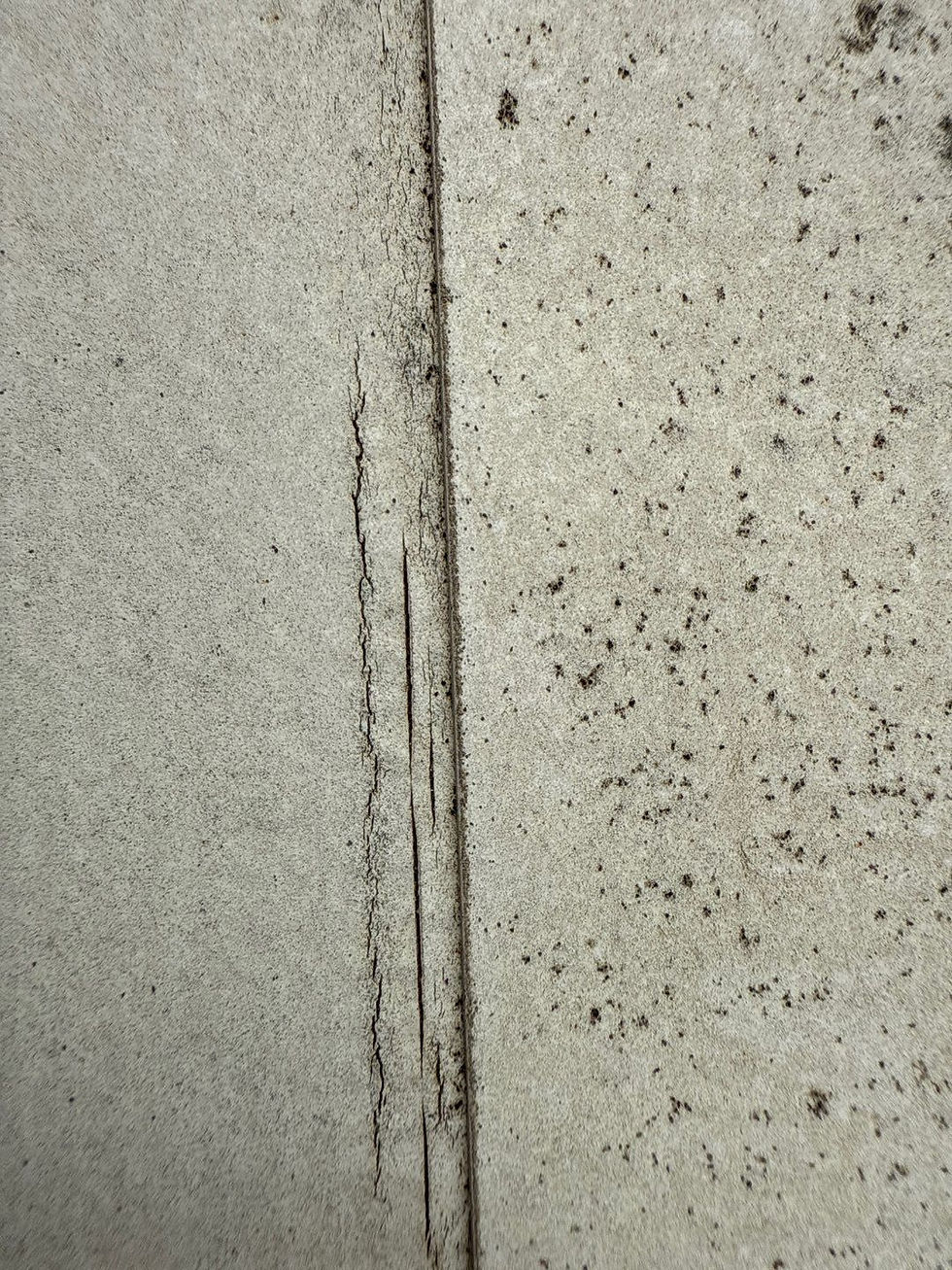
What Fly-By-Night Installers Commonly Do Wrong
Most cheap overlay crews cut corners on:
T-patches
Parapet wall adhesion
Proper fastening patterns
Using correct pipe boots and pitch pockets
Proper terminations
Adding slope
Running welders too hot or too cold
Test welds (we perform them every 10° of temperature change)
Material compatibility
Moisture testing
Engineering load approval
Manufacturer certifications
Using DensDeck on hail-prone buildings (critical for TPO longevity)
These shortcuts lead to premature failure, even on a brand-new roof.

What Makes All Star Roofing Different
We do things the right way — even when it costs us more.
Manufacturer-spec installations
Engineer-reviewed overlays only
Moisture scans before ANY overlay or restoration
Pre-manufactured boots and pitch pockets
Test welds performed every 10° temperature change
Optional (but strongly recommended) DensDeck for hail resistance
Proper parapet termination
Certified installers only
Seamless restoration options for long-term value
Non-prorated, extendable warranties
We educate owners honestly — even when the right decision isn’t the most profitable for us
Because at the end of the day, we want your building to last — not just get a new roof “look.”
Need Help Deciding Between a TPO Overlay or a Restoration?
Every roof is different.
We’ll evaluate:
Moisture levels
Insulation
Structural load
Deck condition
Warranty goals
Hail exposure
Energy efficiency needs
…and give you the truth, not a sales pitch.
📞 Call All Star Roofing LLC: 903-368-8684🔍 Or request an inspection at ASR.LLC
FAQ
Q: Is a TPO overlay a good idea on an older Mod-Bit roof?
A: Only if moisture, insulation, structure, and compatibility all meet strict requirements. In many cases, a restoration is safer and more cost-effective.
Q: Can restoration be done on asbestos-containing roofs?
A: Yes. SPF and coating systems can encapsulate potential asbestos without disturbing it.
Q: How long does a restored roof last?
A: Many restoration systems offer non-prorated warranties of 10–20 years and can be renewed later.
Q: What happens if I wait too long to fix a leaking roof?
A: Once insulation becomes saturated, restoration is no longer viable, and a full tear-off is required.


Comments